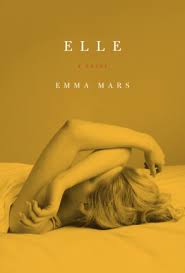
Elle, tome II of the Hotelles series, Emma Mars

Emma Mars delivers the sexy, enticing sequel to her first novel Hotelles and follows the adventures of a young French woman as she continues her carnal education in a mysterious Parisian hotel.

In a hotel room in Paris, a young woman named Elle experiences the most exquisite freedom and sensual pleasure she has ever known, thanks to Louie, the man who has conquered her completely.

So many things in life have changed since they first met. Her engagement to Louie’s deceptive brother, David, has been broken. Her mother has died. Yet Elle is wholly fulfilled with Louie, the master who heightens her senses and unleashes her deep, seductive power.

In the alluring Hôtel des Charmes, Louie takes Elle beyond her wildest fantasies. Exploring the boudoirs devoted to other courtesans—Mademoiselle Josephine, Deschamps, Kitty Fisher, Cora Pearl, and Valtesse de La Bigne—Elle willingly opens herself further. In sublime self-abandonment she discovers absolute ecstasy, absolute sweetness, absolute desire.

Then David unexpectedly returns, stirring up painful memories and threatening their bliss. Elle fears her education may soon be over. . . .

She does not understand that it has only just begun.

Published in April 2015 by Harper Perennial, buy it here.

Bad Conscience, Michel Quint

One morning, a devastating earthquake shakes the residents of Aix-en-Provence out of their beds. When a group of college students decides to take advantage of the ensuing chaos by looting a destroyed jewelry store, they are quickly in over their heads. One by one people around them are dying. Bitter and desperate, survivors are fleeing town in search of a safe haven, complicating the escape path of these unlucky petty thieves.

What started as a get-rich-quick scheme reveals the complex plans of a dangerous criminal mastermind who has evaded capture for years. Professional criminals, amateur thieves, and deranged cops are all racing after jewels. With all their lives in the balance, who will be the last one standing?

Published in April 2015 by AmazonCrossing, buy it here.

Writing Exile

This month’s issue of Words without Borders, a monthly magazine publishing literature from around the world, focuses on the theme of exile.

Living abroad, working and thinking between languages and cultures, I am keenly interested in the ways in which encounters with the foreign shape our identities, transforming us into hybrid beings — caught somewhere between our roots and otherness. This experience, the startling disjunction between self and self-other, is perhaps most radical in cases of exile. Indeed, in the piece I’ve translated for this issue, Chadian author Koulsy Lamko compares exile to a nearly impossible act of grafting:

“Splicing oneself onto a strange root successfully is a miracle. Unless one possesses the properties of mistletoe and can grow on a tree whose roots are not one’s own. Slowly but surely, exile erases us from the memory of our land. And the day we try to go back to our country, to set foot there, by chance, for a sun, a moon, we realize that our land has abandoned us; it has turned its back on us, doesn’t recognize us anymore, has disowned us.”*

Reading the pieces in Writing Exile, I am reminded of a line in Maurice Blanchot asserting that a work worth translating is one that reflects a living language’s otherness with respect to itself (“Traduire”, L’Amitié). Here, it seems that subject and form are well matched, for in a magazine in which translation plays a central role, with writings by Venezuelan, Syrian, Iraqi, Chadian writers in exile, we are given a multiplicity of accounts and voices struggling with the shifting borders between self and other.

Click on the image to access the issue:

logo_wwb

*Citation from a translated excerpt of Les racines du Yucca, a story about an African author with a paper allergy who ends up organizing writing workshops in the Yucatán for exiles and survivors of war.

Guide to Buying Translation

If you’re new to buying translations, the task may seem daunting. How much will it cost? What qualities should you look for in your linguist professional? Can translation software get the job done? The following guide, published by the American Translators Association, provides tips to navigate the process, from determining which parts of your document really need to be translated to communicating effectively with your translator:

getting_it_right

Punctum: Reflections on Photography

The Salzburger Kunstverein is opening an exhibit this July broadly centered around Roland Barthes’s idea of “punctum”, from Camera Lucida: Reflections on Photography, to reflect on the nature of contemporary photography. Curated by Séamus Kealy, “this exhibition takes this concept and term as a starting point for invited participants to select photographs that, for each of them, are emblematic of ‘punctum’, given today’s context for photography and our constant grappling with aesthetics”. I am delighted to have worked with French artist Suzanne Lafont on the English translation of a text accompanying her piece, which features twenty-four portraits of the actors from David Lynch’s iconic television series Twin Peaks. Reflecting on ambiguities between reality and fiction, on transgressions of the threshold that holds them apart, Lafont’s Josie Packard breaks the fourth wall, telling the audience: “The point (punctum) is the moment when the world attaches itself to fiction in order to find its coherence. Call me Joan Chen.”

Featured photograph from exhibit brochure: Spring Hurlbut, Deuil II: James #5, 2008, pigment print , 72.4 x 82.6 cm

July 27 – September 21 : Main Hall / Opening : Friday, July 25 at 8 p.m. / Accompanied by a lecture series

Hotelles

Hotelles, an erotic novel that takes place in the City of Love, came out in early April and is getting great reviews. I loved translating this book: Emma Mars knows how to craft an intriguing plot line; the sex scenes are hot; Paris — its glittering monuments, its cobbled streets, its Haussmannian grandeur — is described in lush detail; and the literary heritage of French Romanticism brings depth to the genre. This book is available in paperback, as an e-book, and in audio format.

Published in April 2014 by Harper Perennial, buy it here.

Colonial Culture in France since the Revolution

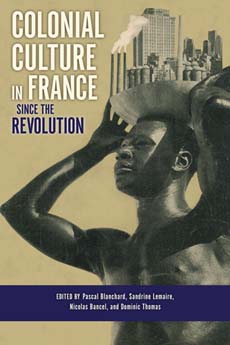
I am excited to lay hands on Colonial Culture in France since the Revolution! Published by Indiana University Press in November of 2013, this ambitious book gathers together articles written by  an international and interdisciplinary group of scholars, writers, and intellectuals. Colonial Culture in France treats of a multi-faceted historical system, mobilizing a term, colonial culture, to describe “the foundations and origins of the contemporary cultural, political, and social landscape” and the ways in which such a system continues to inform narratives of  identity, memory, and history. This collection, which opens on a discussion of abolitionist movements in the mid nineteenth century and ends with reflections on present day issues,  offers the reader a long and detailed view of the postcolonial situation in France, with articles on such diverse topics as education, science, exhibitions, cinema, sports, propaganda, and tourism — to name but a handful. Colonial Culture in France is available both in hardcover and as an e-book.

On Bookstore Shelves Now: African Lives

African Lives: An Anthology of Memoirs and Autobiographies is now available online and in bookstores. This collection features pieces written by authors from across the African continent and spanning several centuries. As editor Geoff Wisner says in his introduction, the book can be read straight through or by skipping around:

The selections are arranged to follow the map of Africa as
you would read a page in a book: top to bottom and left to right, beginning
with North Africa and continuing through West Africa, Central
Africa, East Africa, and Southern Africa. Within each region, the selections
are in alphabetical order by country. Within each country, they are
arranged chronologically, according to the date of the events described.

Layout 1

By a happy accident, African Lives begins in childhood, with Mohammed
Dib’s memories of growing up in Algeria. It ends in maturity and exile, on
a note of leave-taking, as Chenjerai Hove writes to his mother in Zimbabwe
from his new home in Norway. Between these two voices, I hope you will
find many more to challenge, inspire, and enlighten you.”

This is such a wonderful book, and together with my co-translator, Antoine Bargel, I am delighted to make three newly translated pieces available to the anglophone world: Yasmina Khadra’s The Writer (excerpt); Christian Dumoux’ Childhood in Madagascar (excerpt); Tahar Ben Jelloun’s The Fraternal Bond (excerpt).

Five things I’m looking forward to in 2013…

It’s February. Déjà. After the rush of resolutions for the new year, I’ve finally had a chance to reflect on what 2013 has in store: A new membership, publications, and exciting projects and collaborations. It’s shaping up to be a busy year; here are five new things in my world:

1. As of January, I am now a member of the American Literary Translators Association (ALTA), a dynamic network of translators, writers, and scholars, which seeks to further cultural exchange through the craft of literary translation. ALTA promotes literary translation through a number of top-notch publications and at an annual conference, which will take place this year in Bloomington, Indiana. Here’s a link to their site: http://www.utdallas.edu/alta/.

2.  In March, Lynne Rienner Publishers is slated to release African Lives,

Layout 1

an anthology of memoirs and autobiographical texts, written by some of the finest writers from across the African continent and spanning several centuries. I had the distinct pleasure of working with editor Geoff Wisner and fellow translator Antoine Bargel on three incredible texts for this anthology: Tahar Ben Jelloun’s “The Fraternal Bond”, Christian Dumoux’s “Tenth House”, and Yasmina Khadra’s “The Walls of El Mechouar”. This book can be purchased at Barnes & Noble online for a 32% discount.

3. In April, I head to London for the London Book Fair.

63950-640x360-london-icons2-640

I am really excited to participate in this annual industry event, which brings people together from all aspects of publishing in a three-day marathon of seminars, conferences, exhibits, etc. I particularly look forward to meeting fellow translators and reconnecting with acquaintances. Find me there at the Literary Translation Centre!

4. Late November will see the publication of Colonial Culture in France since the Revolution by Indiana University Press, a book I spent the better part of 2012 translating, and which — thanks to its breadth — makes for a thought-provoking and informative read. The 600-page collection of essays features pieces by an international group of scholars and intellectuals on the history and continued relevance of the French colonial project. You can purchase this book directly from the publisher.

5. As an advocate of all forms of book production — from the early manuscript to today’s e-book — I am delighted to be working with French publisher Aux Forges de Vulcain on an e-pub English translation of François Szabowski’s wonderful serial novel, Women Don’t Like Men who Drink.

arton43-d085c

The book follows the fantastic adventures of a modern Frenchman who moves mountains to find meaningful employment. But his plots and ruses end in catastrophe, forcing him to live off the system and take advantage of the people around him. You’ll learn to love the loathsome character in this entertaining social satire! Keep an eye out for the first installment of the e-book later this year.