Translating Bids for the European Capital of Culture

My city, Marseille, was the European Capital of Culture in 2013. It’s one of the first things locals spoke of when I came house hunting ahead of a move south in 2016: ECoC had transformed neighborhoods, revitalized heritage sites like the iconic Vieux Port, spurred cool initiatives like the GR2013 (a hiking trail linking urban and natural spaces), and funded the first national museum outside of Paris–the MuCEM. So, when an offer came to work with a team of translators on proposals for the 2028 European Capital of Culture, I didn’t hesitate.

I had the opportunity to work on two ECoC bids, at different phases of the bid process and with two separate teams. Each bid was unique, reflecting the singular character of the cities vying for the title and the visions of the program designers. But the parameters of the selection process and the European Commission’s vernacular also afforded a certain familiarity to the task the second time around.

Challenges for these projects included:

–> Time

Our teams faced extremely tight, hard deadlines and evolving source texts as the bid teams made updates to the French document right up to the last minute. Time was the reason behind dividing up the work among three linguists, since the volume of work was simply too large for a single translator to handle. We also streamlined communications with the bid team by creating a Google Docs query sheet and WhatsApp group for on-call requests.

–>Multi-handed translation

To meet the time constraints, we worked as a team of two translators and one reviewer, with one translator (me on project two) acting as the project lead to interface with the client. Maintaining consistent language and tone of voice are key challenges on group translations. We had two initial calls–one with the client and one internal team call–to set out some basic guidelines and align on client expectations as well as lexical preferences. We also worked in a Computer Assisted Translation tool with an editable glossary and constantly updating Translation Memory. This allowed us to gain maximum consistency as we worked, but of course the final review was critical to harmonize key terms and style preferences, as well as to ensure the client guidelines had been respected throughout.

–>Client interfacing

These translations were done within an agency, where typically the Project Manager handles the bulk of client interactions. Our team was well supported by the PM, but the specifics of these projects–time crunch, evolving source text, very hands-on clients–meant more direct contact between the linguists and the bid writers. I was designated as the project lead on the second bid, which meant acting as the face of our team for the client, responding in real-time to updates and queries, and keeping our team informed of actionable client communications. I participated in several calls throughout the process to explain translation choices, better discern client expectations, and manage last-minute requests.

–>Translating for non-native speakers

The jury reading ECoC bids is composed of European readers for whom English is not likely their mother tongue. The language required is therefore not necessarily the most idiomatic or ‘native’ English. Instead, the focus is on creating clear, direct phrasing. With French as the source text, this involved simplifying syntax and breaking apart intricate sentences, but without losing any of the content or intention.

–>Research

Cultural projects are typically research intensive, involving searches for standard translations of organizations, works of art, and so forth, as well as contextual deep dives into artistic movements and cultural figures. ECoC bids, which tend to include an overview of a city’s cultural and historical heritage as well innovative initiatives by established and emerging contemporary artists for the ECoC year, are particularly research heavy. Again, the time constraints on these projects added significant pressure since research is always time consuming. We reduced some research time by pooling knowledge in a Google Sheet shared with our language team and targeted client querying.

As deserving as they were, our ECoC bid cities did not win the title, but I’m thrilled to learn that Bourges–the Territory of the Future–will be the 2028 European Capital of Culture for France, and I’m excited to see how the organizers will showcase the city and its cultural offering.

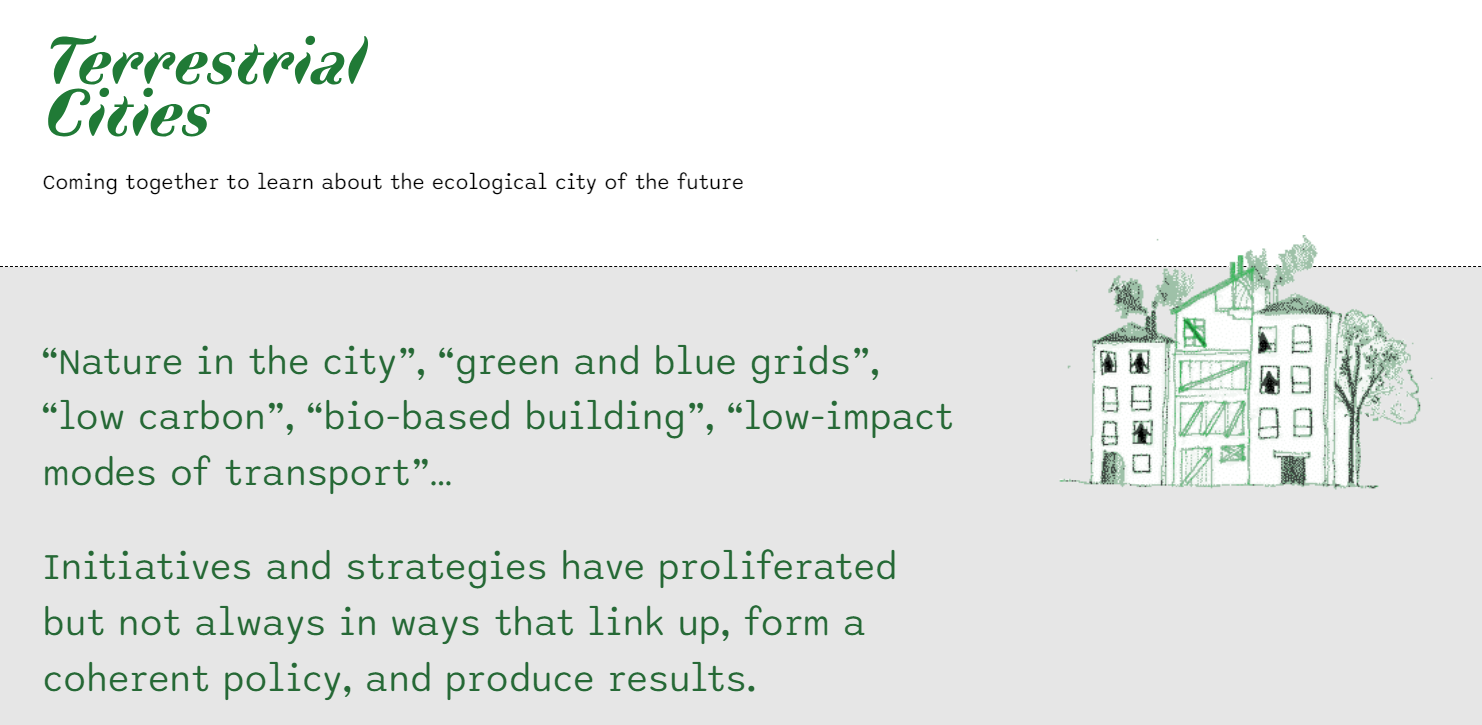
Translating Terrestrial Cities

Terrestrial Cities is an initiative aimed at giving urban decisionmakers and city dwellers the tools to create environmentally harmonious and sustainable urban spaces, distinguish between truly transformative policy ideas and greenwashing, and — no small feat — save the world, one city at a time, from an ecological doomsday. To do this, the minds behind Terrestrial Cities have developed an interactive card game to be played between four+ people and one facilitator.

The job here was to translate the website, card game, rules, and facilitator handbook from French to English.

Challenges and particularities of the job included:

–> Researching environmental terminology and movements

–> Hunting down quotations that had been translated into French from English sources.

This can be a time-consuming process, especially for out-of-print resources. A particular challenge was finding quotes from Ivan Illich, who wrote and published works in multiple languages, with variations in each language. Resources were found through extensive Google searches, Scribd, e-books, client queries–and after poring over texts to find the exact citation (the Find feature is helpful here, though not always).

–> Some source formatting inconsistencies

This is a common issue, particularly for texts that are written over time by many authors, as was the case here. Good practice is to flag source formatting inconsistencies in the query process with the client. It helps the client improve their materials, and ensures the translator is following the ideal formatting consistently in the translation.

–> Not falling down interesting rabbit holes!

This project was so fascinating on so many levels, since it covered all kinds of possible solutions to environmentally problematic urban infrastructure. It was a real challenge not to spend copious amounts of time learning about all the ins and outs of transportation, energy, building materials, and more.

Check out the initiative here: https://www.villes-terrestres.org/en

111 Museums in Paris

What fun it was to participate behind the scenes in the translation of the French entries of this unique guidebook. Sitting here at my desk in Marseille, I was able to discover and rediscover gem locales all over the City of Light, including 19th-century cabinets of curiosities, a surprisingly endearing museum of hunting and natural life, a round-the-clock outdoor sculpture museum, and so much more. Author Anne Carminati does a fabulous job making even the big institution museums seem fresh and intimate. And working with Karen Seiger, the charming editor of this series, was a treat in itself.

Challenges on the translation end of this project included:

–> This book was authored by two ‘guides’–one French (Anne Carminati) and one American (James Wesolowski) –so part of the job involved keeping Anne Carminati’s tone of voice, while harmonizing the translation style with the existing American copy.

–> Reviewing and incorporating the 111 Style Guide preferences. As I’ve mentioned elsewhere, adapting a translation to a House style guide (or client style preferences) is an important part of any translation project.

–> Familiarizing myself with the different museums. Each entry in a guidebook requires some research to ensure that I’m accurately translating descriptions. I also ‘fact check’ a bazillion details, including proper names, cultural references, addresses, artwork titles, etc.

Learn more about 111 Museums in Paris and its authors, and pick up a copy, here: https://www.111places.com/111-museums-in-paris

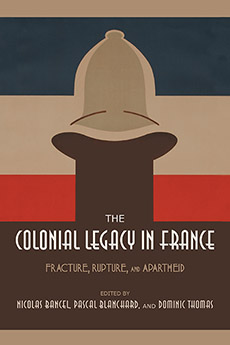
The Colonial Legacy in France Fracture, Rupture, and Apartheid

Edited by Nicolas Bancel, Pascal Blanchard, and Dominic Thomas
Translated by Alexis Pernsteiner
Distribution: World
Publication date: 5/2/2017
Format: cloth 500 pages
6 x 9
ISBN: 978-0-253-02625-5

Debates about the legacy of colonialism in France are not new, but they have taken on new urgency in the wake of recent terrorist attacks. Responding to acts of religious and racial violence in 2005, 2010, and 2015 and beyond, the essays in this volume pit French ideals against government-sponsored revisionist decrees that have exacerbated tensions, complicated the process of establishing and recording national memory, and triggered divisive debates on what it means to identify as French. As they document the checkered legacy of French colonialism, the contributors raise questions about France and the contemporary role of Islam, the banlieues, immigration, race, history, pedagogy, and the future of the Republic. This innovative volume reconsiders the cultural, economic, political, and social realities facing global French citizens today and includes contributions by Achille Mbembe, Benjamin Stora, Françoise Vergès, Alec Hargreaves, Elsa Dorlin, and Alain Mabanckou, among others.

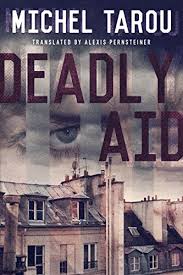
Deadly Aid, Michel Tarou

Jeanne Lebrec knows that in real life, criminals are rewarded and the virtuous suffer. As a social worker, she has dedicated herself to helping the poor, the desperate, and the down and out, but now it seems like all she sees are deadbeat dads and drug-addicted moms who use people and have no desire to better themselves.

One day, after a particularly heartbreaking case, Jeanne reaches her limit and does something unexpected—with deadly consequences. Before long, she’s secretly practicing her own twisted version of “social services.” In a world where bad guys win and good guys pay, is there a difference between justice and retribution?

Published by AmazonCrossing in July 2015: buy it here.


Bad Conscience, Michel Quint

One morning, a devastating earthquake shakes the residents of Aix-en-Provence out of their beds. When a group of college students decides to take advantage of the ensuing chaos by looting a destroyed jewelry store, they are quickly in over their heads. One by one people around them are dying. Bitter and desperate, survivors are fleeing town in search of a safe haven, complicating the escape path of these unlucky petty thieves.

What started as a get-rich-quick scheme reveals the complex plans of a dangerous criminal mastermind who has evaded capture for years. Professional criminals, amateur thieves, and deranged cops are all racing after jewels. With all their lives in the balance, who will be the last one standing?

Published in April 2015 by AmazonCrossing, buy it here.

Writing Exile

This month’s issue of Words without Borders, a monthly magazine publishing literature from around the world, focuses on the theme of exile.

Living abroad, working and thinking between languages and cultures, I am keenly interested in the ways in which encounters with the foreign shape our identities, transforming us into hybrid beings — caught somewhere between our roots and otherness. This experience, the startling disjunction between self and self-other, is perhaps most radical in cases of exile. Indeed, in the piece I’ve translated for this issue, Chadian author Koulsy Lamko compares exile to a nearly impossible act of grafting:

“Splicing oneself onto a strange root successfully is a miracle. Unless one possesses the properties of mistletoe and can grow on a tree whose roots are not one’s own. Slowly but surely, exile erases us from the memory of our land. And the day we try to go back to our country, to set foot there, by chance, for a sun, a moon, we realize that our land has abandoned us; it has turned its back on us, doesn’t recognize us anymore, has disowned us.”*

Reading the pieces in Writing Exile, I am reminded of a line in Maurice Blanchot asserting that a work worth translating is one that reflects a living language’s otherness with respect to itself (“Traduire”, L’Amitié). Here, it seems that subject and form are well matched, for in a magazine in which translation plays a central role, with writings by Venezuelan, Syrian, Iraqi, Chadian writers in exile, we are given a multiplicity of accounts and voices struggling with the shifting borders between self and other.

Click on the image to access the issue:

logo_wwb

*Citation from a translated excerpt of Les racines du Yucca, a story about an African author with a paper allergy who ends up organizing writing workshops in the Yucatán for exiles and survivors of war.

Punctum: Reflections on Photography

The Salzburger Kunstverein is opening an exhibit this July broadly centered around Roland Barthes’s idea of “punctum”, from Camera Lucida: Reflections on Photography, to reflect on the nature of contemporary photography. Curated by Séamus Kealy, “this exhibition takes this concept and term as a starting point for invited participants to select photographs that, for each of them, are emblematic of ‘punctum’, given today’s context for photography and our constant grappling with aesthetics”. I am delighted to have worked with French artist Suzanne Lafont on the English translation of a text accompanying her piece, which features twenty-four portraits of the actors from David Lynch’s iconic television series Twin Peaks. Reflecting on ambiguities between reality and fiction, on transgressions of the threshold that holds them apart, Lafont’s Josie Packard breaks the fourth wall, telling the audience: “The point (punctum) is the moment when the world attaches itself to fiction in order to find its coherence. Call me Joan Chen.”

Featured photograph from exhibit brochure: Spring Hurlbut, Deuil II: James #5, 2008, pigment print , 72.4 x 82.6 cm

July 27 – September 21 : Main Hall / Opening : Friday, July 25 at 8 p.m. / Accompanied by a lecture series

Hotelles

Hotelles, an erotic novel that takes place in the City of Love, came out in early April and is getting great reviews. I loved translating this book: Emma Mars knows how to craft an intriguing plot line; the sex scenes are hot; Paris — its glittering monuments, its cobbled streets, its Haussmannian grandeur — is described in lush detail; and the literary heritage of French Romanticism brings depth to the genre. This book is available in paperback, as an e-book, and in audio format.

Published in April 2014 by Harper Perennial, buy it here.